|
|
Weekly Florida Keys Fishing Update from Capt. Dave Schugar and Sweet E'Nuf Charters
July 14th, 2011
During our summer months, the Florida Keys can be a bit warm…well actually, just down right hot. The hot summer days can be avoided by fishing at night, without the sun baking you like a roast.
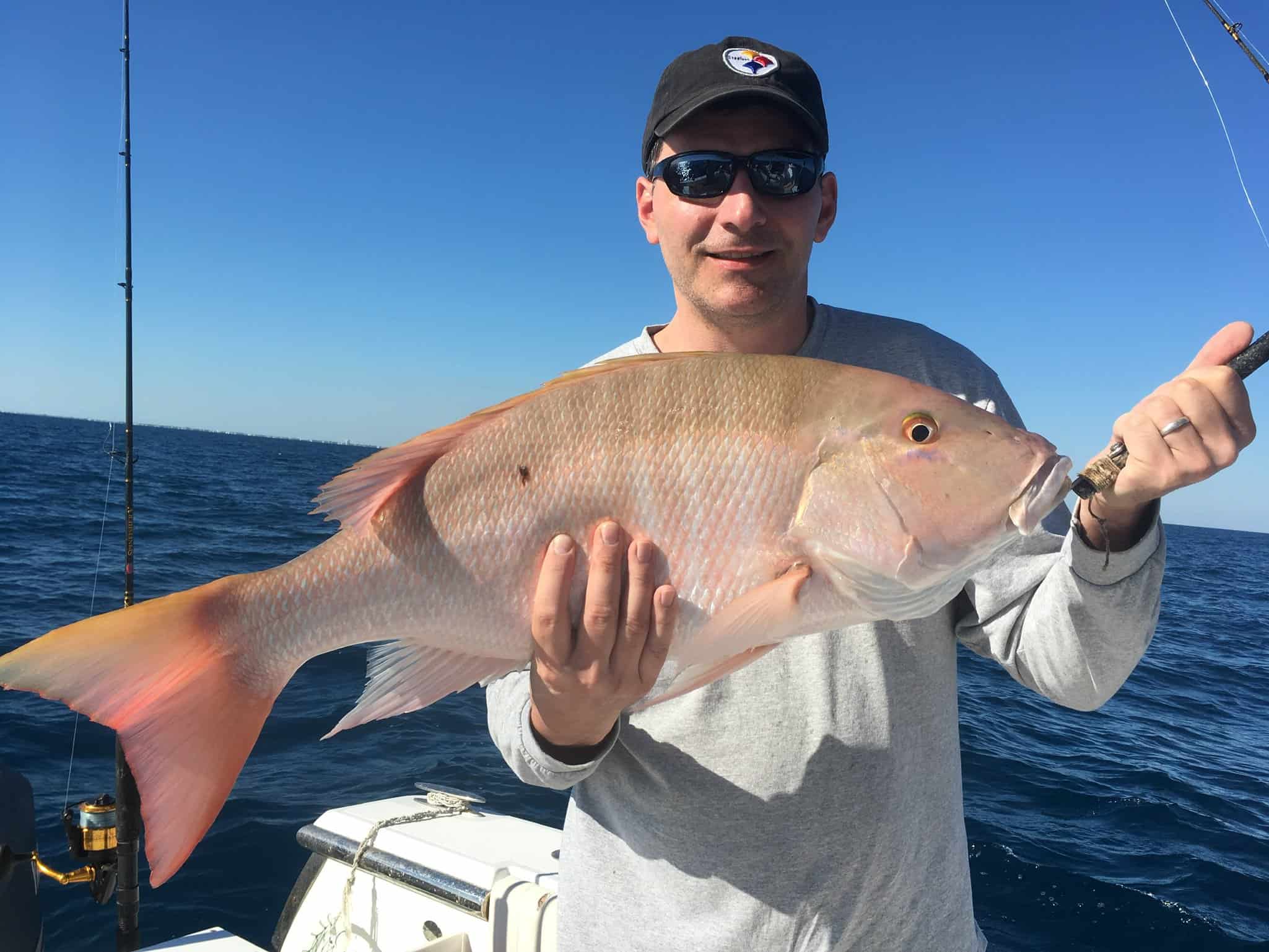
You have many options to choose from, but my favorite is the incredible mangrove snapper bite. During the summer, mangrove snappers congregate out on the reef to spawn and this triggers the need to feed. You can break out the light rods for this style of fishing and make it a little more sporting.
When looking for a good area, it is important to find a nice piece of structure, whether it is in 18 feet or 60 feet of water. What you are also looking for is a nice flat spot where you will park the boat with the current going towards your structure. When you start fishing you will want to fish the bottom with a knocker rig. This rig is quite simple; I like to use a piece of 40 pound fluorocarbon leader which I tie to my main line with a double reinforced uni-knot. The reason I use fluorocarbon leader is not fort its vanishing properties, but for its abrasion resistance. I will slide enough lead on the leader for the amount of current that you have at that moment. Then I tie an offset 3/0 long shanked hook. The offset helps with your hook up ratio, and the long shank makes it easier to remove the hook later.
You don’t need a lot of chum for this style of fishing, just enough to keep a slick going. As the night progresses, you will start to notice the snappers will come off of the bottom. When they do this, I will take off the lead and just free-line my bait. You will also notice that there are plenty of pilchards swimming around the boat so don’t forget to bring your cast net, because you can catch all the bait you need right there. I always bring enough bait just in case the pilchards aren’t very thick, but they usually are. Live bait works well, but I find the fresh cut pilchards are the best. Another good trick is to limit the amount of light emitting from your boat; because the snappers are drawn to the boat by the chum they do not like the light. This is also why we tend to fish for the snappers at night near the new moon, not the full moon. If you have no control of the intensity of the light you will want to cast your bait out into the dark beyond the light.
Night fishing can really spice up your vacation! As I can recall, one night we had lots of snappers already so we started to use live bait on a flat line with wire. We got into an impressive kingfish bite. Almost as soon as the bait hit the surface we were hooked up with 10-15 pound kingfish. On this really light tackle we had some good drag screamers. When you put chum in the water you never know what can show up. While out there we caught many small sharks (Atlantic Sharp Nose), moray eels, a few red grouper and what’s really neat is the worm hatch. If you look in the dark you can see little green luminescent creatures. Actually the worm doesn’t glow, but it releases a fluid that glows which actually is spewed out to distract predators. These worms are the food for the pilchards so sometimes when you cut up the pilchards you will see the stomach contents will glow…pretty neat, at least to me it is.
Now remember to only take what you can use and don’t be wasteful with our limited resources. Fishing with conservation will preserve our excellent fishery for kids and their kids so don’t be greedy and enjoy the fun.
Tags: Bait, Fish, Fishing tackle, Florida Keys, Florida Keys Fishing, kingfish fishing, Mangrove snapper, mangrove snapper fishing, Outdoors, Recreation Posted in Offshore Fishing Report | No Comments »
July 14th, 2011
This past month I spent some time in the Bahamas, but the highlight of our Bahamian adventure was visiting a small Island that Christopher Columbus landed on when he claimed he found the New World. For those of you who don’t remember your earlier education, it was San Salvador. This small island, which is surrounded by very deep water, is a feeding area for the Blue marlins’ major migration through May, June and July. These fish travel enormous distances as the tagging program has shown, but little is known of a migration pattern. But what we do know about these fish is that they will travel up the Atlantic seaboard of the United States and across the Atlantic to Portugal, Spain, and West Africa. The tagging program has also shown that they travel from The Gulf of Mexico to the Bahamas, but with the lack of data there seems to be no set pattern, except that at certain times of the year they will show up in different locations in great numbers.
On our way from Harbor Island to San Salvador, we caught a large white marlin around 80 pounds. Not shabby for only fishing for an hour and a half on one of the pinnacles on our way down to San Salvador. Once we got to San Sal (as it is known to us fisherman), we got ready for some of the best blue marlin fishing we had ever seen. To actually get shots at blue marlin every day means that there has to be lots of them around. I also figured out that even when it’s slow the fishing is still good here and to improve your chances they do seem to prefer bait over lures some days. The bait we used was horse ballyhoo and mullet rigged to swim. The ballyhoo we rigged, were some swimmers and some with little chuggers in front of them to help keep them in the water and producing smoke, it seems that the smoky baits draw attention and usually are the one who get hit most often.
On the first day we trolled artificials around most of the day with no bites. It was a little disheartening, but at the buzzer we got a strike on the short bait right behind the squid teaser. Line was peeling off the reel at an incredible rate. By the time everyone got all the other baits and teasers in, the fish had nearly taken 300 yards of line. The fish had never jumped so we still weren’t sure if it was a marlin or not. With my buddy Andy Payne in the chair, it wasn’t long before we started to gain back some of the line that was taken so fast. About half of the line that was taken was back on the reel when the fish decided to go on its second run peeling off all the line we gained back plus some. After a half hour of a fight every fisherman dreams of, we finally got first sight of the fish and it was a marlin. With the owner of the boat at the helm, I was leader man. I was able to muscle the fish to the boat with no wraps. The fish was tired and I decided to get a quick photo of him in the boat. I lifted him into the boat and Andy and I got a great photo before reviving him and setting him free to fight another day. We estimated him over 200 pounds. It was getting close to cocktail hour so we headed for the harbor for some victory drinks.
The next day we headed out around 8:00 in the morning to the north end of the island and we trolled plastics again all morning with no bites. I suggested we ought to switch over to bait and slow the boat down a bit and it wasn’t ten minutes before we were hooked up to a nice fish around 300 pounds. It jumped all around for the first ten minutes; he was a true superstar of a fish. This time the angler was the owner’s father Tom at the age of 85 years old. What a trooper! He fought this fish for over a half hour before it a shark ate it, but in the Bahamas there are no shortages of large sharks.
We set back up and in about fifteen minutes we had our second fish on for the day. This one was bit smaller than the last but another superstar, jumping and thrashing back and forth, just absolutely mad as hell. This fish was very grumpy, but Tom handled it very well for an old timer such as himself. This was one of the things he said that was on his bucket list, catch a blue marlin. Well after a long forty five minutes Tom got to check that one from the list…we had released his first blue marlin that was estimated around 250 pounds.
Later that afternoon, we had a third chance to catch another blue marlin. I was driving the boat when I looked back at the right short bait and it was being beaten up by a huge marlin I estimated it to be 500-600 pounds. It finally slammed the bait and we were hooked up. It was smoking our biggest reel, an 80 Penn International. This fish didn’t jump all that much but he had that reel almost dumped by the time the guys got all the baits and teasers cleared. I was in full reverse water coming over the gunwales and spray covering the pit. After driving backwards for fifteen minutes we were able to get some line back on the reel. I was doing all I could do to keep what line was left on the reel. The fish sounded and I was able to get a lot of line back but still the fish was 150 yards out, or might I say down. I don’t know really how far down he went but we were fighting the good fight when the line just went limp. We thought that this one had got eaten too, but after reeling the line in all the way we noticed that he had just came unglued. That happens; it just sucks when it does.
The following day we decided to go tuna fishing and we trolled for a half day and caught 10 tunas up to 40 pounds. Half blackfin tuna and half yellowfin tuna, we did well for just a half day of fishing on the hump to the north of the island. The very next day we went marlin fishing and caught two nice sized ones off of the north tip of Rum Cay which is about 16 miles to the south west of San Salvador. This area is called Jurassic Park for the sheer size of the fish taken there.
Another day of tuna fishing and a few more days of marlin fishing and our trip was over, but it will be one I will remember for a long time. We ended up catching 5 blue marlins, one white marlin, numerous large dolphin up to 50 pounds and plenty of tuna and weighing in at 50 pounds. Everyone caught one marlin and Andy caught three two blues and a white. We ate fresh sashimi on the dock most nights with seaweed salad which we brought with us. Grilled tuna and dolphin and silk snappers were our proteins most nights, but the steaks we brought weren’t bad either.
If you ever get the chance to fish the Bahamas I recommend the San Salvador and don’t forget to ask for Kim’s bread and cheese cake when you go it is unforgettable like the fishing.
Tags: Bahama, bahama fishing, blue marlin fishing, Christopher Columbus, Gulf of Mexico, Rum Cay, San Salvador, sharks, Sweet E'Nuf Charters, tuna fishing Posted in Offshore Fishing Report | No Comments »
May 2nd, 2011
Well May 1st was the opening day of the long waited grouper season. I was going to take a few friends out for a grouper digging party, but it got belayed due to a last minute charter. I was called by a returning client whose friend was entered in the Seven Mile Marina grouper tournament and their captain had come down with an illness which wouldn’t allow him to fish. My crew consisted of Dave, who owns a construction business down here, John and Gigi who owns DOT PALM, and one of their employees, Shawn, and his girlfriend. So at the last minute, we gathered all the necessary equipment and tackle and left the dock at 8:00am and headed out to get the best grouper bait there is, white grunts. Most people overlook these small pan fish whose notoriety was known for grits and grunts back in the day. They come equipped with a natural grouper call, when they become distressed.
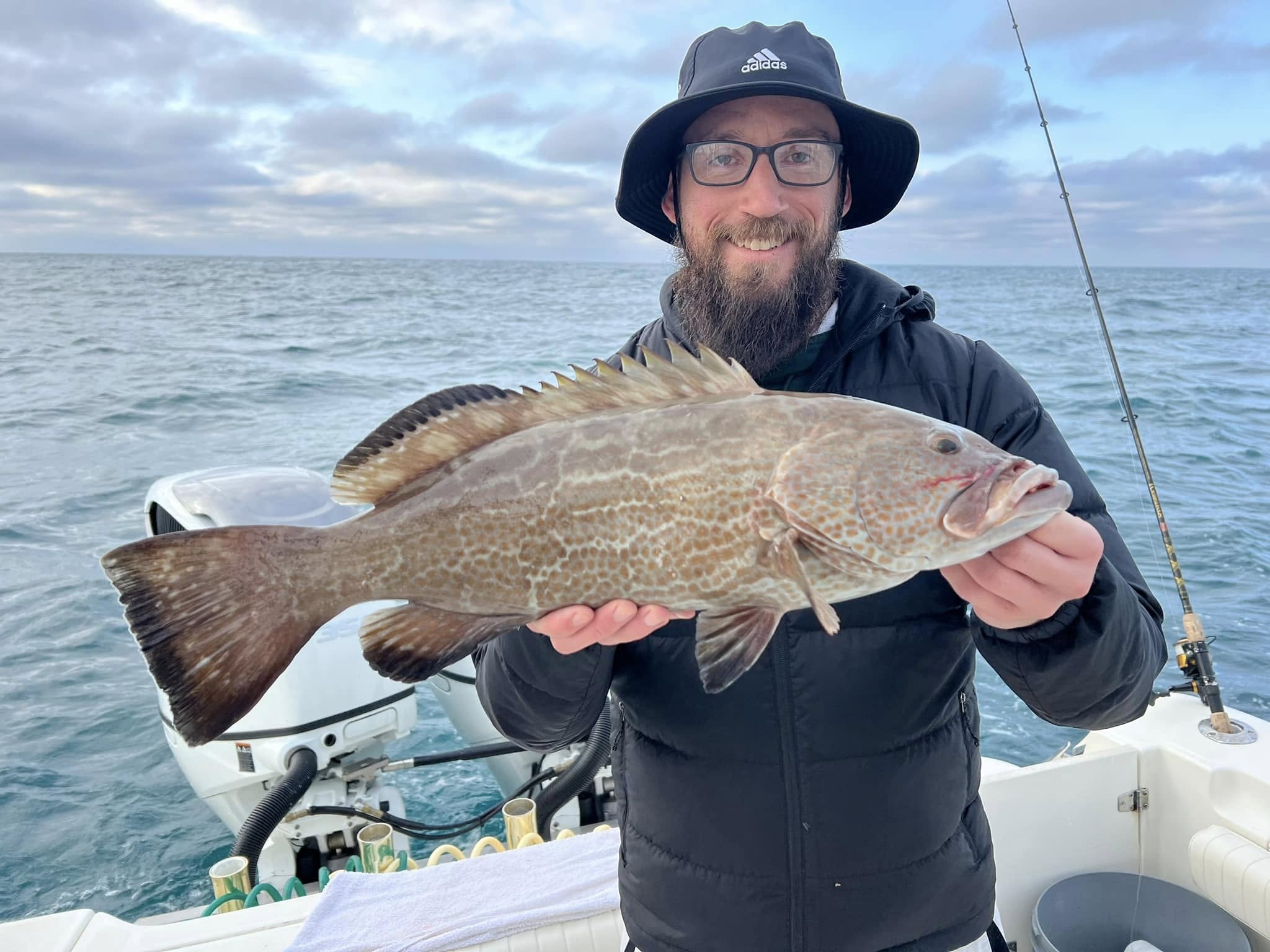
After loading the live well with 30 or so grunts we headed out to a wreck and couldn’t get anchored due to the fact that we had a short anchor line and not enough chain on John’s boat. He said after this day he was going to get the enough chain and anchor line so this never happens again. Since we couldn’t get anchored there, we headed just inside the wreck on the edge of the reef and set up. It wasn’t 30 minutes before we had our first bite, and soon after that we had 14 and 16 pounder in the box. Two very nice black grouper, but not big enough to win the tournament. So we waited for the boat that was on the wreck to leave, and when he did, we anchored right into the structure to get hooked up. After a 10 minute wait, we had a big bite and missed it. But it came back, and we got a solid hook up and John fought the fish for 15 minutes before landing a 21 pound black grouper.
Still not satisfied with the size, we kept fishing. Shortly after that Shawn hooked a monster which we ended up losing when the line got caught on the dive ladder bracket. It was getting late but I knew there are some big ones still here so we waited for another bite and it wasn’t long…but about half way up it got eaten by a shark. Knowing that the sharks are here now, we weren’t going to get anymore to the boat so we left to hit our final spot.
It only took a few minutes at the new spot before we had another 12 pounder in the box. We got another big bite and fought this fish up but lost it due to unseen circumstances…another fish lost due to the bracket on the boat so it was getting late and the weather conditions were getting worse so we headed in and weighed the fish in. Knowing that it would be a miracle that we could hold first place, someone upstairs was looking out for us and it held, we took first place with a 21.7 pound black grouper. If we could have kept the big one on we would have been heroes, because that fish was well over 40 pounds. Since I have caught black upwards of 60 pounds, I’m guessing what we had on I would defiantly say it was 40+ pounder. You couldn’t have a fish story if the fish didn’t get away, but knowing that he is still down there I will be back to capture him on a later date.
Come on down, we got room still left in May, It will be my pleasure to show you a great time and catch some of these powerful bottom dwellers. Book your trip through the web site and act soon to ensure you can get a day of some of the best fishing in Florida.
Tags: black grouper fishing, Capt. Dave Schugar, Fish, Florida, Florida Keys Fishing, florida keys fishing charter, Grouper, Outdoors, Recreation, Seven Mile Marina Grouper Tournament, Sweet E'Nuf Charters Posted in Offshore Fishing Report | No Comments »
April 20th, 2011
Busy busy. Wow, can’t seem to get a break to write my reports. Sorry guys, I know a lot of you can’t get enough fishing and this is one of your fixes.
I have been dolphin fishing a lot. It has been ok, not great yet, but any week now though the big fish ought to start pouring through. Mostly what I have been catching are schoolies, and some gaffers. I haven’t seen many big schools, but we have been getting a few dozen decent fish, nothing we had to measure and plenty of filets for my clients. We have been tuna fishing too, having a ball jigging and even getting a few big ones in the 20 pound range. Unfortunately the bite isn’t all day, but after a good morning bite, we ended up finding a few schools of dolphin to round out the day.
On the reef it has been hot and cold. The big yellowtails have shown up in full force, but the sharks tend to eat half of what we hook. Some of the tails are in the 3-5 pound range, which is huge, because a normal yellowtail is about one to two pounds. If you have ever caught a five pound yellowtail, you know that’s a big fight. It is amazing how such a small fish fights so hard. Once they get big like this they tend to be hard to catch, but as the spawn is nearing they are starting to eat up the chum bag behind the boat. We have been catching lots of grouper, so I can’t wait to May first when we can keep them.
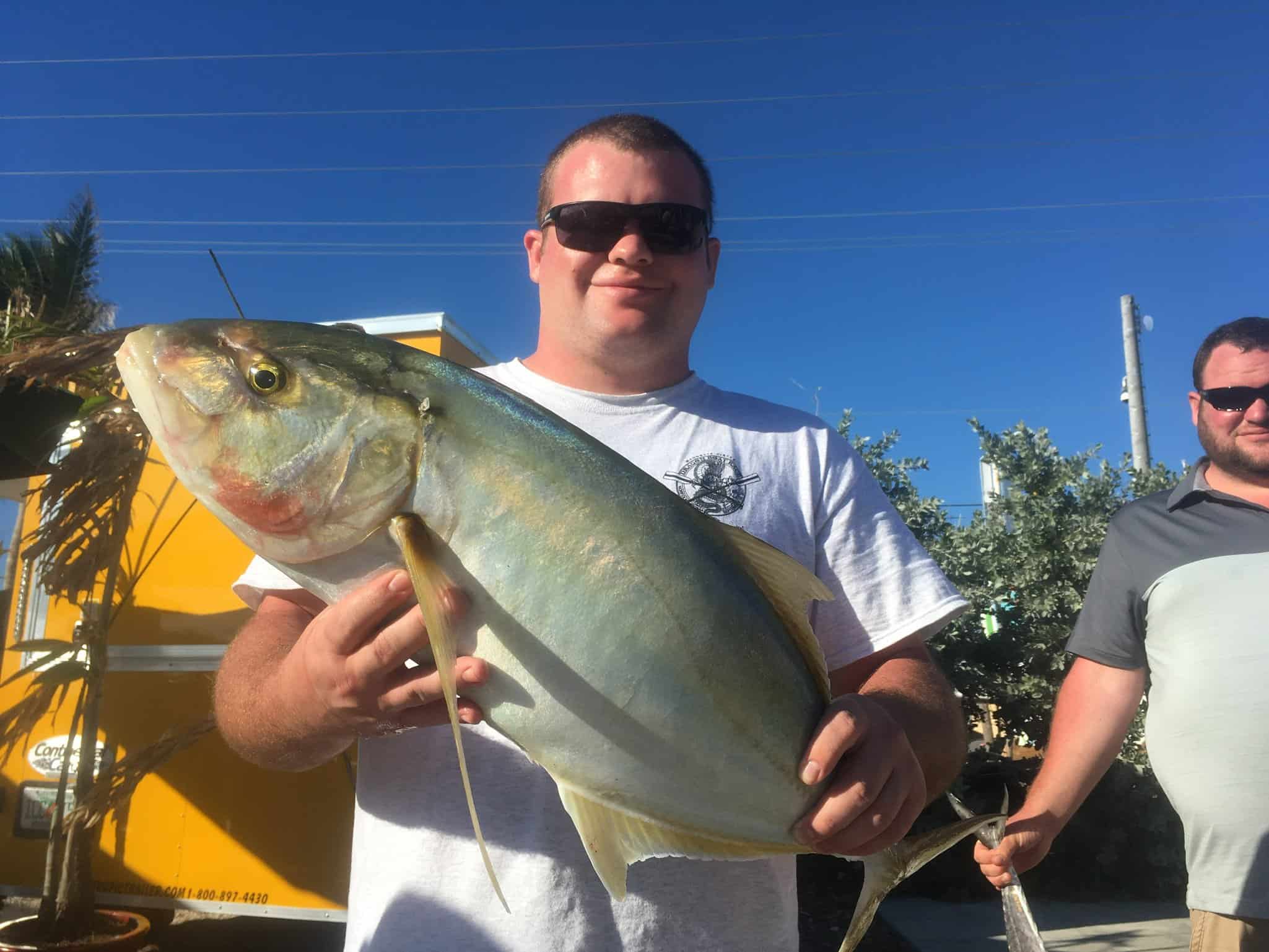
The permits have been biting really well at a few wrecks, and we smoked them one day catching 14 of them. The next day we caught five. We basically sight fish for them…we just wait till we see them and then cast a crab on a jig and whamo! You’re on. Most of the fish are from 10-15 pounds, but we did manage to catch one over twenty.
If you are waiting to book your trip for May, don’t wait too long, I am almost completely booked up, but I still have some room in June.
Tags: Capt. Dave Schugar, dolphin fishing, Fish, Florida Keys Fishing, florida keys fishing charter, Marathon fishing, permit fishing, Recreation, Sailfish, Sweet E'Nuf Charters, tuna fishing, yellowtail snapper fishing Posted in Offshore Fishing Report | No Comments »
April 3rd, 2011
Hi everyone, sorry for the lack of posts, but it wasn’t for the fact that I wasn’t fishing, but I haven’t had any days off for 30 days. It has been very busy down here. The wreck fishing has been very good with plenty of mutton snappers up to 25 pounds, but most around 10-18 pounds. The amberjacks have been spawning and the bite has been off the chain. One day we caught 30 almaco and amberjacks in 4 hours. That was insane; every drop got hit as soon as it hit the bottom. We also did very well during the full moon, and that cycle is coming again, the week of the full moon should be incredible for the muttons. I am looking to get plenty of them this spawn.
Dolphins have been sporadic, but our tuna fishing is really good in the mornings and afternoons. Most of the fish are around 10-15 pounds, nice eaters. I have gotten a few in the 20’s but only a few. Each time we went tuna fishing we caught more than my clients knew what to do with. But no worries, my friends filled in to take the leftovers. I expect the dolphin to show up any day now, so stay posted, I will let you know when they arrive in full force. Since we caught so many 25+ pounders last year, I believe the ones we didn’t catch will be close to 50 pounds this year. I expect to catch plenty of 40+ fish this year so be prepared to do some battling.
For those of you who aren’t aware of the deep drop closure, we can no longer target queen snapper, tilefish or snowy grouper, but we can still hit the barrel fish and the rose fish, so I plan on attacking those spots while we are out there dolphin fishing. If you haven’t had a chance to eat any barrel fish you are missing out, it is exquisite. We are trying to get this closure over turned, but it is slow and tedious, but all of us fisherman, including my clients are writing their Congressman and telling them this is an unfair closure and is wrong.
The yellowtail bit really well this week, but with such a large shark presence we were not able to get the big ones to the boat before they got eaten. We were hooking 3-5 pound yellowtails and they fight hard, and it isn’t easy to get them to the boat even without the shark presence. As they gear up to spawn the bite should only get better.
Keep in touch drop me a line every once in a while and let me know who everything is going. Take care and keep fighting the closures that NOAA has been dropping in our lap this year.
Tags: barrel fish fishing, Dolphin, mutton snapper fishing, rose fish, tuna fishing, yellowtail snapper fishing Posted in Offshore Fishing Report | No Comments »
March 10th, 2011
This week the dolphin showed up while were fishing the Leon Shell Tournament that gives money to Hospice, a very worthy cause. The sailfish have been slow but we were able to pull out fourth place. But the real story is about the little green fellers, dolphin season is officially open. All day long we were attacked by 6-10 pound dolphin, I only wish we weren’t in a tournament, otherwise we could have filled the cooler. Most of the fish were from 110 to 140 feet of water. Most of the day they attacked our live baits like a pack of piranhas.
After the tournament I took out a great family who had never been to the Keys before. Since the dolphin have been around we started with the troll and caught seven nice fish, mostly 10 pounders, but the bite slowed down as the day went on so we switched gears and hit the wrecks. The first drop we hooked a monster, I figured it was an amberjack, but when it came up, I was pleasantly surprised when it was a 20-pound mutton. On the very next drop we had a double header, but lost one shortly after it bit. To my surprise, another 20-pound mutton, we hit the jackpot. Jumbo muttons chewing for some first timers, I couldn’t have planned it any better.
The next drop we got another monster, but this time it was a 50 pound amberjack. Fishing with spinners amberjacks are a grand battle, long strong runs and dogging my clients the whole way up. They are truly a great Sport fish of the Florida Keys. These clients were having so much fun, as was I, when we pulled up another 20-pound mutton. After losing a huge fish we couldn’t stop, most likely a big black grouper we looked at the time and boy; the time flew by, only time for one more drop. Another double header, this time two amberjacks, one 35 pounds and another 50 pounder. What a wonderful day for a family’s first visit to the Keys, memories they will never forget.
The next day I had a sad day, a burial at sea, they always get me choked up, and I never even met the old timer. His last wish was to go fishing one last time and then have his ashes spread into the ocean. It was rough and his family was in good spirits, as we headed out to find some dolphin. It wasn’t long before we had the first fish on, maybe three minutes. It was a nice ten pound dolphin which had a hard time eating a trolled ballyhoo. I had to drop back three times, to finally get him hooked up. Shortly after that we caught another one and then it was like they were never there. I headed out to find some grass, but there was none, so I headed back in where we caught the other two fish along the color edge. We finally got another hit and it turned out to be a nice kingfish. It was rough and some of my clients were getting sick so we decided to head to coffins patch to do the service. On the way there we caught another kingfish. It was a slow day, but you can’t always catch a lot every trip. The service was moving, and with tears flowing, my throat got all tight, and I am glad it was a short service otherwise I would have been joining the rest of them sobbing. He sounded like a great man, from the stories they were remembering, and the fact that he raised his kids, and they felt that he did a wonderful job. It is always sad to see our loved ones go.
On the next day I had a guide trio on the 50 foot Bertram I have been running for a client I have had for over three years. We headed out and started the troll at the reefs edge. There was not much for conditions, but we trolled along and out of the corner of my eye I see a dolphin making a B-line to my right rigger. I yelled down from the tower and said,”Dolphin coming for the right rigger.” He slammed the bait and the line popped out of the rigger, but he wasn’t hooked. Dan Chambers dropped back the bait and the dolphin scarfed it up. After a brief battle on the trolling rod we boated the first fish, a 18 pound cow.
I headed out offshore after an hour with no more bites, and when we hit an area outside the thunderbolt in 250 feet of water we caught a small 6 pound black fin tuna. I kept trolling around in this area and boated many more tunas, as a squall line appeared to the north. It wasn’t long before we got hit with 50kt winds and a water spout of our port side. It got really rough in moments. It went from flat calm seas to 8 foot, six feet apart from each other. We called the trip early, but it had been a great day with a big dolphin and a cooler full of tunas. I am glad I was in that big boat instead of my 33 foot Hydro sport when the winds hit. I was in conditions like this before, and the rain stings like needles at that wind speed. It sure was nice to stay dry up in the flying bridge. The wind was blowing so hard it blew out the outrigger, snapping two cables and bending the outrigger. As soon as we hit the dock, the wind died as if it had never happened, freaky, freaky stuff.
Tags: amberjack fishing, blackfin tuna fishing, Capt. Dave Schugar, dolphin fishing, Florida Keys Fishing, florida keys fishing charter, kingfish fishing, Leon Shell Tournament, Marathon fishing, mutton snapper fishing, reef fishing, sailfish fishing, Sweet E'Nuf Charters Posted in Offshore Fishing Report | No Comments »
February 8th, 2011
This pas week we had a group of business owners who are clients of Auto Profit Masters that came to the Keys for a class and relaxation. What a great group of people from kids to grandparents I was able to find fish for them to catch.
The first day I took out Alan and his son, who fished me a couple of years ago. We headed out to the hump for a day of tuna fishing. When we arrived at the hump we saw an oasis of tuna. Tuna busting the water all over the place, jumping out of the water, terrorizing the bait on the surface. We caught tuna on the first drift and watching the tuna eat right behind the boat still gets my blood flowing. There were a few boats out there and they seemed to gravitate to my stern, causing them to scare the fish behind our boat to go down. To get the big tunas to eat behind the boat can take 100-300 freebees. We can only hold so many baits, so when another boat ruins our drift that’s just one less tuna we can catch. So when you are out at the hump be courteous, don’t troll or run your boat behind anyone, go in front of them so you don’t ruin their fishing.
After getting mugged by the other boats we started to jig the tunas and we were hooked up, mostly smaller ones than we were catching on the live bait. I had a game plan of jigging for a while until some of the boats to leave so we could live bait again. We caught lots of tuna on the jigs, and later in the afternoon we caught a bunch of 20-30 pounders on the live bait. I also dropped a bait down 400 feet to target amberjacks. The hump has some of the largest concentration of amberjacks which we were able to catch one over 50 pounds. What a great trip father and son, having the time of their lives catching and laughing, just a great time had for all.
On the next day I had out Brian and Kobi from Alaska, John and another Alan. Since I fished all last week for snappers, we decided to go out and find some for these guys. I went to one of my patches, which has been smoking hot all last week. We caught some, but it was a little slower than I had liked. We caught mangroves, mackerel, and yellowtail. They were on the smaller side, but they still taste good. We also caught about 15-20 small groupers, just about all the shallow water spices. We caught black, red, grasby, and red hind groupers. Most of them were small blacks around 18 inches long, but a good fight on light tackle. After catching 30 or so snappers we headed to some wrecks for some bigger fish. It was really slow, but I kept hitting different wrecks until we found one that was producing. It was a little weird, we would get bites on all the wrecks, but then after loosing a few the wrecks would shut down. This happens usually when there are predators around, but I think we just lost them in the wreck, which happens when we fish close to them. Finally we found a wreck, which produced a mutton snapper, our target species, and some amberjacks and almaco jacks. We kept one to smoke; they are wonderful for smoked fish.
On the third day I took out some of the staff from Auto Profit Masters, Will, Andy, Jake and Chad. It was a rough day to go to the hump but the bite was better out there then on the reef and wrecks. So we roughed it to the hump, a long trek out there but well worth it. We were the only ones out there and we caught tuna after tuna. The bite was as good or better than a couple days prior. The fish were all over 10 pounds, and some up to 20 pounds. Live bait wasn’t working very well, so we jigged most of them. Even in the rough water, these guys stuck it out and caught a tremendous amount of tuna. We didn’t keep them all, but enough for them to split up to take home. We had a close encounter with a hammerhead shark where I grabbed him by his dorsal fin. That’s how close he was to us, trying to eat our tuna we were able to get some good photos, and I got the silly notion to grab a hold of a green hammerhead shark. Once he noticed I had a hold of him he got upset and took off at a blistering speed. When we got back to the dock I had cut up some of the tuna for some fresh sashimi while my clients waited for their fish to be cleaned, another benefit of keeping my boat behind a restaurant that serves sushi.
On the fourth day I took out one of the Owners of Auto Profit Masters and his family. Since they had to do class that afternoon we were scheduled for a half-day charter, which would mean that we weren’t going back to the hump. So we hit the wrecks and caught amberjacks and almaco jacks. It was as good as it gets, double headers AJ’s take a while to get in, averaging a 30 minute fight we had enough time to catch eight 30-pound jacks. Smiles all around, the brute strength of these fish is tremendous. From catching walleye to 30 pound Jacks, there is just no comparison. Up in Colorado they fish for walleye and they were telling me it is like catching a plastic bag, they weren’t used to fish that fought back, so all in all they were extremely satisfied with there big fish experience.
Tags: amberjack fishing, black grouper fishing, blackf, Capt. Dave Schugar, florida humps fishing, Florida Keys Fishing, florida keys fishing charter, grasby grouper, hammerhead shark, mackerel fishing, mangrove snapper fishing, Marathon fishing, red grouper fishing, rock hind grouper, sashimi, Sweet E'Nuf Charters, tuna fishing, yellowtail snapper fishing Posted in Offshore Fishing Report | No Comments »
January 16th, 2011
Wintertime has come early this year and as the weather cools the water, fish will venture towards the deeper, more stable water temperatures. February is a great month to fish down here in the Keys. The mutton snapper bite will be very stable throughout the winter on the wrecks and reefs. There are many ways way to fish for muttons, but I believe the most productive way is live bait. Muttons can be tricked to eat many different types of artificial lures and most small live baits. As with muttons, groupers and amberjacks will also be very abundant on the wrecks and reefs as well.
Fishing the reefs for muttons may be different than what you think. Most people think of reefs and they assume that the depth of water is from 25-100 feet. Well, they are mostly right. We also have reefs as far out as 200 feet. They generally have low relief and can be stacked with muttons. There are bands of reef that stretch east and west ranging in depths of 125-200 feet of water. I will scout areas where I have caught fish in the past, and what I am looking for is bait. Looking at your depth finder, look for what most of us call fuzzy bottom. This fuzzy bottom is scattered bait such as tomtates and other small grunts and porgies. This is the primary food source for the muttons while they are out on these reefs.
These reefs also have an abundant supply of small crustaceans, which muttons can’t resist. Occasionally I get snagged on these deep reefs, but by having a rig with a breakaway lead you will save most of your rig if you do encounter a snag. I will fish these areas where I mark bait. It takes a while sometimes until you find out where the fish are hanging out on the reef. One day they will be right on top, other days they will be in the sand, either inside or outside of the reef. Using a three-way swivel rig or swivel bead swivel method, drifting or slow trolling your bait back and forth on these deep reefs you will eventually find out where the fish are gathering. Once you find the fish, you will find them in similar locations on other reefs.
Wrecks are highly guarded so don’t bother asking any of the local charter boat captains. But keep your eye on your bottom finder when you are running in 100-300 feet, you just might find some. I have been given some of the numbers that I have and traded with other captains to accumulate about twenty wrecks in a thirty mile area. I have found about dozen on my own, by just looking at the bottom while traveling from spot to spot. A good way to find wrecks is to look for bait gathering on the surface or on your depth sounder. If you are marking lots of bait, there is a good chance there is wreck near by or a very healthy reef. There is a neat website that has wrecks so you can start with a few. This website is www.artificalreeflocator.
I mainly use live bait on the wrecks, but I do have a few friends who love using jigs for muttons and groupers. I do use butterfly jigs for the amberjacks when the kingfish are not swarming, because otherwise it can get quite expensive. Don’t over look dead bait; it can work great some days. I prefer split-tailed ballyhoo or bonita strips for my dead bait. When using dead bait I will hold my rod high and when I get a bite I will drop the tip and allow the mutton or grouper to inhale the bait especially on long baits such as ballyhoo and bonita strips. I make my leaders long, 15-20 feet to be exact. I use the long leaders for two reasons, one is to get the bait away from the bouncing lead, and the other is to ensure the mutton snapper gets the bait in his mouth before you start reeling. I always use at least 10oz of lead or more. I find that sash weights or bank sinker type weights tend to hold better than egg sinkers. Keeping the weight close to the bottom is usually sufficient, if the lead comes up about ten feet or so is ok too. If you find that your lead is having a hard time staying down, and already have over a pound on, try backing up to your line to keep your lead on the bottom. We call this a controlled drift, and on really windy days it is the only way to go. When the wind and current allow it, I can literally troll my bait across the bottom in search of a hungry mutton, and I always watch for my lead to hit the bottom every once in a while. You can also just drift and systematically cover the bottom until you find the muttons. Having a long leader allows the bait to stay close to the bottom where the muttons food is naturally found. I have caught muttons half way up while reeling in after a drift; so even high in the water column you can catch these tasty critters.
Fishing wrecks may require a little boat handling skills on windy days to ensure that you are able to keep your bait in the zone as long as you can. I find that most of my bites will occur fairly close to the wreck. But don’t pull up and start over until you get a tenth of a mile away from the wreck as muttons circle the wreck at different distances. Just like the deep reef, when you find an area near the wreck where you caught one, you should be able to hit that spot again and again. Some people like to anchor up on these wrecks, but that requires precise anchoring. It may take you a few times to get it right, but when the bite goes off, it best behooves you to be positioned right. Sometimes anchoring can diminish your chances of catching a lot, due to the fact that the fish are not located right behind your boat. Before anchoring I would drift around and try and find out where the fish are eating. Then after determining where the school is feeding, anchor up so that the spot is right behind the boat. When anchoring we use bombs, which are cut bait and soft chum mixed with sand. You can place this mixture in a paper bag and drop it to the bottom. When the bomb hits the bottom it explodes expelling chum and chunks, which the larger fish will snack on until they see your bait. There are some cons about the bombs, as they attract sharks and triggerfish. Sharks are bad because once they key on you, getting your fish to the surface in one piece can be almost impossible. Triggerfish will kill your bait or even remove it from your hook without you knowing it, so use the bombs only as a last ditch effort on a slow bite.
The tackle I use for mutton fishing is light, but effective. You will loose some big groupers but if you want to target muttons, but the lighter the better. I use 50-pound braid with a 10-20 foot shock leader of 60-pound. This shock leader has two jobs. It gives you a little stretch as the fish runs hard and it also allows my lead to slide along the mono and not the braid. I use the swivel bead swivel method, which acts like a three-way but doesn’t allow the fish to feel the lead and gives you great sensitivity for even the lightest of bites. By sliding a bead before the swivel it will not allow the lead to slide past your knot from the braid to mono. Then I slide on another bead before tying on my swivel, which my 15-20 foot leader is attached to. This extra bead keeps your lead swivel from catching on your knot to your swivel from the leader.
So to simplify this rig, slide a bead on, then slide a swivel on, slide another bead and tie another swivel to your shock leader. The swivel that slides I attach one foot of 30-pound where I attach my lead for the break away. I use 30-50 pound floro carbon for my leaders, but regular mono for the shock leader. The shock leader needs to stretch and mono stretches more than floro carbon.
As for my hooks, I prefer to use a circle hook, it allows for non targeted species to be released unharmed, and for my inexperienced anglers who have a hard time keeping the line taught at all times. The circle hooks also tend to catch fish in the corner of the mouth so that the fish’s teeth aren’t rubbing on your leader. They don’t have very sharp teeth but with enough pressure and time the muttons will have no problem severing through your leader if they are gut hooked.
I set my drags light because muttons don’t normally run for cover, but instead high tail it for open water. If there is a lot of structure where you are fishing you may want to tighten up your drag a bit and use some 50-pound floro. I like circle hooks, and the one I use is made by Mustad and are called Circle Demons. I generally use 8/0 and 9/0 in this style; to me it is like Velcro to an Afro if you ask me. I rarely miss bites and that is important when my clients are fishing. So get out there try something new, and take these tips for your next fishing trip down here in the Keys.
Tags: amberjack fishing, ballyhoo fishing, bonita fishing, Capt. Dave Schugar, Florida Keys Fishing, florida keys fishing charter, kingfish fishing, Marathon fishing, mutton snapper fishing, Sweet E'Nuf Charters, triggerfish, wreck fishing Posted in Offshore Fishing Report | No Comments »
December 3rd, 2010
As the leaves change color up north and people are decorating for the holidays, I am down here in the Keys getting my boat ready for all of you. The mad rush of people after the holidays is what I call the great start of our season. For those of you that haven’t booked yet, you better get on it, or you won’t get out on a charter boat. We will all be booked; so don’t miss out on the greatest part of your vacation.
The fishing has been pretty steady, between the sword fishing, sail fishing, grouper and snapper on the reef. This is a great time of year to fish, so many options to choose from. We can target the cobias and goliath grouper in the Gulf or fish the reef for yellowtail snapper, mangrove snapper, mutton snapper, grouper, and kingfish. Just outside the reef we will live baiting for sailfish, and catch some other species as well.
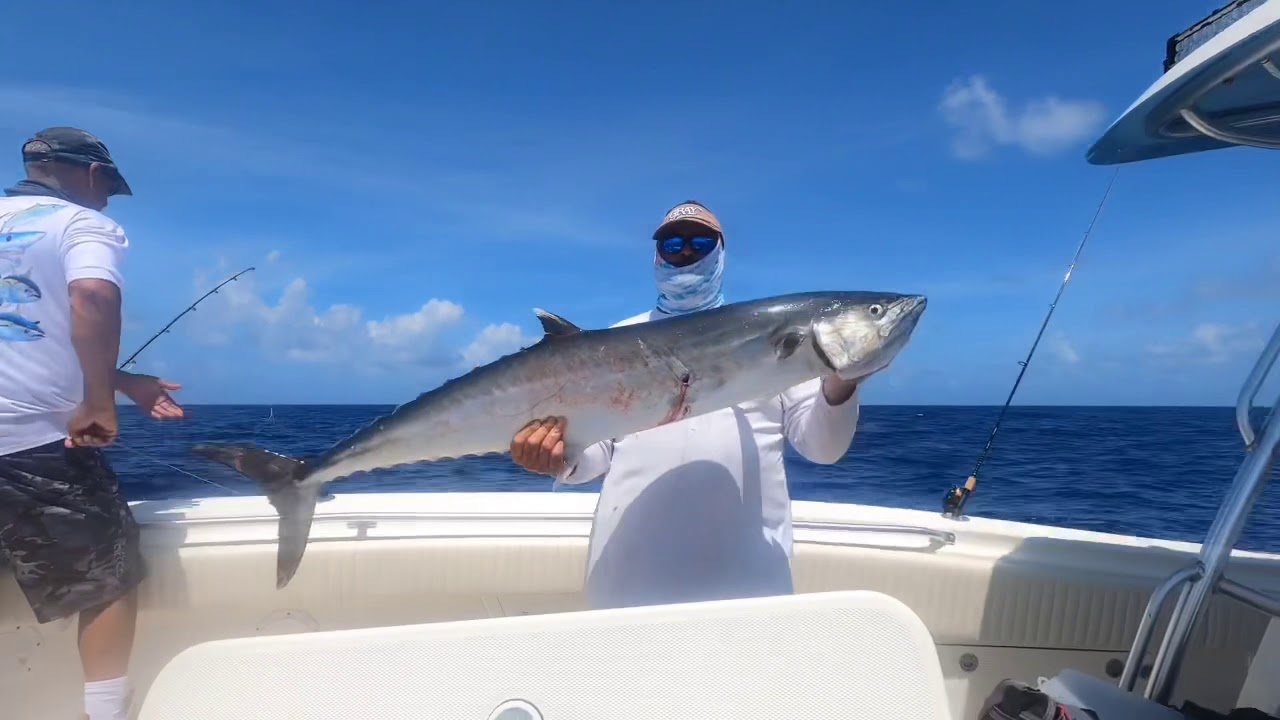
Just this past week I was reef fishing, and the yellowtails were biting good, it wasn’t long before we limited out and we changed our tactics to kingfish and we got a few ten pounders and one forty plus pound king too. My clients had a ball, and they ate well the whole week. One of the greatest ideas our restaurants had is to cook your catch. I don’t know when this started but the Keys have been doing it a long time. Bring in your fresh fish and have the restaurant cook it for you, it doesn’t get any fresher. Every restaurant will do this for you down here so take advantage of not having to cook it and then clean up after you’re stuffed from eating the freshest fish you can get.
I took out a family to the hump for some hot tuna action. It was so hot we hooked 50+ tunas but were only able to land a half dozen. We had a shark problem, which I have never seen it so bad. We had four or five sharks swimming around the boat at any given moment. We hooked tuna and fought them to the boat only to have the shark eat it before we can get it close enough to gaff it. After about 20 shark bite offs, I asked my clients if they wanted to do something else, but they said it was great to hook a fish fight it and then feed it to a shark. So we stayed and kept feeding the sharks. I always try to keep my clients happy and they were smile all around. We had fresh sushi at the dock when we got back and a few cocktails always end a great fishing trip. I look forward to fishing with them again.
I had a shot to go sword fishing this week too, it was stormy and rough but we ventured out there anyways. We had many bites, just couldn’t get them to swallow the bait. We finally got one to eat and we caught him after a short battle. It was too small to keep so we took some quick photos and released him back to grow up. We had a few more bites after we release the small fish but never hooked up again. It can be difficult to get these predators to eat the bait sometimes. But when they do, hold on you will be in for a battle.
I would like to wish everyone a happy and safe holiday season, may this coming year be better than the last, and come on down forget your troubles and lets go fishing.
Tags: Capt. Dave Schugar, cobia fishing, florida humps fishing, Florida Keys Fishing, florida keys fishing charter, goliath grouper fishing, grouper fishing, kingfish fishing, mangrove snapper fishing, Marathon fishing, mutton snapper fishing, sail fish fishing, snapper fishing, Sweet E'Nuf Charters, sword fish fishing, tuna fishing, yellowtail snapper fishing Posted in Offshore Fishing Report | No Comments »
November 3rd, 2010
Wintertime fishing is here, so get ready for some bent rods. The Florida Keys have so much to offer this time of the year. Fishing offshore you can expect to catch swordfish, dolphin, wahoo and blackfin tuna. As for the reef, yellowtails, muttons, groupers, cobia and kingfish will be the target for most anglers. Fishing for such an assortment of species it would be wise to bring many different kinds of baits and tackle. One of the greatest attributes of the Florida Keys is that our fishing areas overlap in which you can fish for multiple species at the same time.
The biggest draw to the Florida Keys is our world-renowned sailfish. Catching ten sailfish in a day can be easy on the right day. When we get the north winds the bait gets piled up on the edges of the reef and become targets of the hungry sailfish. Watching hundreds to thousands of ballyhoo jumping for their life as sailfish chase them for their morning snack always gets my blood flowing. Getting positioned to attack these bait sprays can be tough, but if you have a tower it makes it easier, find the bait showers, which will get you in the area. Once you are in the area look for the sailfish themselves as they chase and ball up the bait. Once you have a target, position the boat up wind so that your angler will have an easy throw to the sailfish. I prefer to belly-hook the baits so I can jerk them and cause them to swim down.
Make sure every bait you pitch out is healthy and lively. If you have pilchards for bait, I like to scoop ten to twenty of them over the side to get the sails eating, and when you pitch yours out it becomes an easy transaction. Sometimes the sailfish want only ballyhoo and I will hook them through their tail for a quick pitch bait or wrap the bill with wire keeping the hook exposed.
Last years sailfish season was out of this world, and I expect the same for this season. Since we release all of our sailfish, they are capable to spawn and continually increasing their population. One of my favorites is a quad, four sails hooked up and going in different directions. There is nothing more fun than watching a sailfish dance across the water as line screams from the reel. Sailfish are such an incredible animal, beautiful and magnificent, king of the Florida Straits.
While fishing the reef we tend to anchor up and chum. I prefer to use one bag with two blocks in the bag. The action of the two blocks of chum rubbing together creates a heavy flow. Some people prefer to have two separate bags with one block in each, which is fine, but what I have found if you want a heavy flow of chum you need two blocks in a bag at a time. Yellowtails have voracious appetite, and will become balled up on the surface for easy pickings. To help keep these fish up on top, you must have oats; yes regular rolled oats that you eat for breakfast. Thaw a block of chum overnight in a five gallon bucket, then mix with water and oats. Keep scooping this mixture in the water you will see the difference.
While chumming on the reef I love to drop down the heavy rods for grouper and muttons. I will always drop the heaviest rig first, that’s usually when the biggest one hits. I am rigging my 50 wide with 80-pound braid on a heavy, but flexible custom standup rod. Using 100-pound leader to Mustad #9174 8/0-9/0 and enough lead to hold the bottom. Don’t forget to sharpen your hooks, unless they are the laser sharpened hooks. I can recall one day out fishing when I had gotten lazy and didn’t sharpen one of my hooks and I missed three bites in a row, and as soon as I sharpened the hook, we had resumed catching again. Your guess is as good as mine, but I believe it really helps your hookup ratio. Fishing the reef with this combo will take good form and muscle. Back when I was learning from my mentor, he called this style of fishing stop-um or pop-um fishing. Grouper roam a few feet from holes, rusty metal, and ledges, so it is in your best interest to get him coming up. You can catch plenty of grouper on lighter tackle, but you are almost guaranteed to loose the big one. The biggest grouper I have ever caught on rod and reel is 450 pounds. That was a challenge with the rig I use, but eventually I got him coming to the surface. Goliath grouper are the largest but pound for pound the black grouper is king. I have gotten nice blacks up to 60 pounds, and without heavy tackle, I would never have seen fish so big.
While anchored up chumming go fly a kite. Kite fishing can be added to your day quite easily. When you’re yellowtaling you don’t want live bait flat lines, they will scare the schools of yellowtail snapper. So, using a kite you can take these baits and place them just out side of the yellowtail school, naturally making it a target for other predatory species. If you want to catch a big kingfish, wahoo, sailfish, or even cobia, I like to use speedo’s, goggle-eye’s, large pilchards or herring. If you cant catch those, a blue runner or 12” or better yellowtail will work for bait. Remember you are creating a feeding frenzy and causing a lot of commotion. Naturally, predators will circle as they look for an easy meal. By using the Kite you are keeping the lines out of the water and you will still be able to yellowtail fish and drop to the bottom for groupers and muttons.
Always remember to only keep what you can use and release everything unharmed, so we can keep this great fishery abundant as it is today. Please don’t forget to support our troops who keep our freedom safe so we can enjoy ishing on our open oceans.
Tags: blackfin tuna fishing, Capt. Dave Schugar, cobia fishing, dolphin fishing, Florida Keys Fishing, florida keys fishing charter, Florida Straits fishing, goliath grouper fishing, grouper fishing, kingfish fishing, Marathon fishing, mutton snapper fishing, pilchards, sailfish fishing, Sweet E'Nuf Charters, swordfish fishing, wahoo fishing, yellowtail snapper fishing Posted in Offshore Fishing Report | No Comments »
|